The Robots Are Coming! The Robots Are Coming!
“I’m not worried so much about robots developing their own agenda and taking over the world."
“I’m not worried so much about robots developing their own agenda and taking over the world."
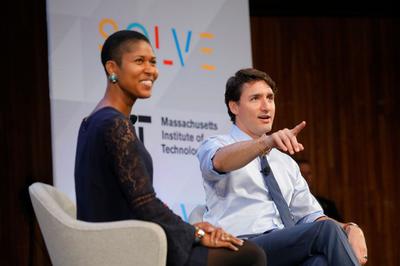
At flagship Solve event, Canada’s prime minister urges audience to help shape the changes transforming society.
Neil Gaikwad, a PhD student at the Media Lab, has received the GSC Graduate Teaching Award, an Institute Award presented annually to one MIT professor or teaching assistant from each school for excellence in teaching a graduate-level course. Neil researches human-centered AI and public policy for s…
The monthly women's lunch brings together women graduate students and postdocs to connect, build community, and develop professional and personal skills. Fall 2021 SpeakersKristen L. Dorsey- Making advice about academia work for youSpring 2021 SpeakersMari Castaneda- Journey Through Academia: From …
Alum David Sengeh shares the news that he has accepted a post as Chief Innovation Officer for Sierra Leone.
Nan-Wei Gong and figur8 are spurring the growth of wearable technology within the sports medicine and digital health sectors.
Andrew Heyward has a plan for finding and identifying innovation in local TV news.
Rana el Kaliouby is now helping AI understand human emotion. Rosalind Picard pioneered the field of affective computing.
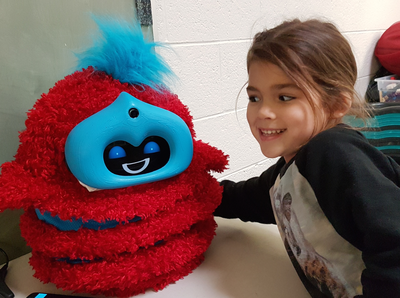
Exploring how the relational features of robots impact children’s engagement and learning.
Neri Oxman and a group of researchers from the MIT Mediated Matter group have developed a water-based digital fabrication platform.
The Shelley Project studies how to produce horror stories as a result of collaboration between humans and artificial intelligence.
A case study implemented by Inioluwa Raji under the guidance of Joy Buolamwini
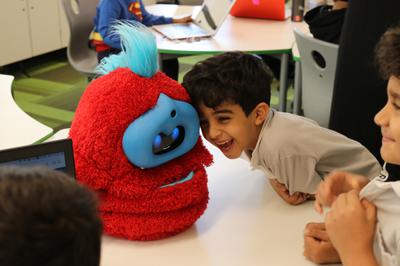
I grew up in a small town in Transylvania, and will always remember the day when I assembled my first computer and loaded the first mp3 songs and movies on it. At the time we didn’t yet have Internet in my home, and I was exchanging files via CDs with my friends and my father’s colleagues. By the t…
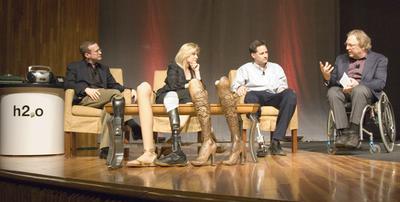
Revisit Human 2.0, a 2007 Media Lab symposium focused on the future of human adaptability.

Machine learning and data science can help us better understand and address the underlying causes of poverty and crime.

An interdepartmental collaboration brings out the music of nuclear fusion

Interaction Design category
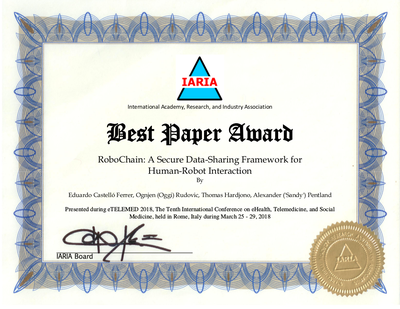
The RoboChain project has been recognized with the best paper award at the Tenth International Conference on eHealth, Telemedicine, and Social Medicine (eTELEMED) in 2018.You will find a copy of the original paper below:
Arnav Kapur’s AlterEgo lets him communicate, switch TV channels, and more by talking silently to himself.

Public buildings account for the greatest energy demands in the Andorran economy. As part of the City Science Lab @Andorra, a team of scientists, both from the Media Lab and Andorra, set out to deploy a network of sensors in an elementary school to gather information on Andorra’s energy usage. The …
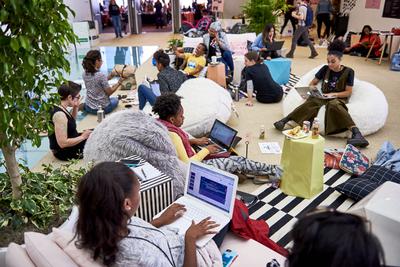
Make the Breast Pump Not Suck hackathon at the Media Lab emphasizes social and political issues over engineering
Cool things happen when you control water with a computer.
Fadel Adib, assistant professor in Signal Kinetics group at MIT Media Lab, is a recipient of Google’s 2018 Faculty Research Award. As part of Google’s commitment to developing new technologies to help internet users find and use information, the Google Faculty Research Awards Program aims to recogn…
Exploring the concept of rebirth